Why Vintage Glass Bottles Are Not Just Trash

The Misconception of the Empty Vessel
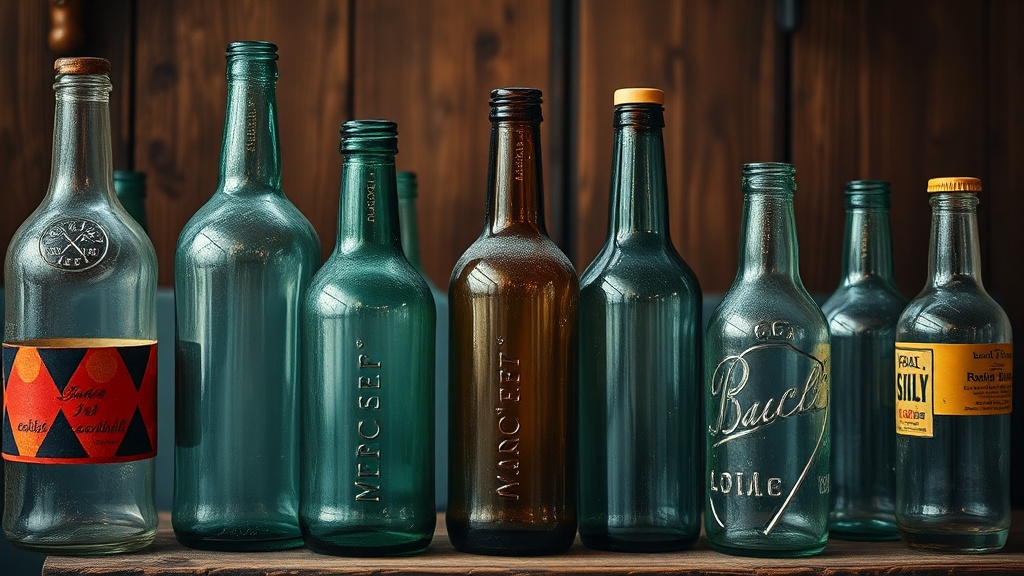
Many people walk past a shelf of old, dusty bottles in an antique shop and see nothing more than empty, discarded containers. They assume that because the liquid is gone, the value has vanished with it. This is a fundamental misunderstanding of what makes a collectible significant. A bottle isn't just a vessel for a product; it is a physical record of industrial history, a snapshot of a specific era's aesthetic, and often, a piece of art in its own right. Whether it's a cobalt blue medicinal bottle or a uniquely shaped soda bottle from the early 1900s, the value lies in the form, the color, and the story it tells about the time it was produced.
Collecting glass requires a shift in perspective. You aren't just looking for a container; you're looking for a piece of history that survived the passage of time. In the world of smalls and bottles, the absence of the original contents is actually the starting point for the collector. We aren't looking for what's inside—we're looking at how the glass was blown, how the color was achieved, and how the shape reflects the technological limits of its day.
What Makes an Old Bottle Worth Collecting?
Collectors often ask why one piece of colored glass fetches a higher price than another. It usually boils down to three factors: rarity, condition, and provenance. Rarity isn't just about how many were made, but how many survived. A common green cider bottle from the mid-19th century might be easy to find, but a translucent, hand-blown amber bottle from a defunct apothecary is a different story entirely. Condition is equally vital. A chip in the rim or a crack in the base (often called a "grounded" defect) can drastically change the desirability of the piece.
You should also consider the manufacturing method. Is it mold-blown? Is it hand-blown with a pontil mark on the bottom? These details are the fingerprints of the maker. To understand these distinctions, it helps to study the evolution of glassmaking. For instance, the transition from hand-blown glass to machine-made glass marked a massive shift in the availability and variety of bottles. You can find extensive documentation on the history of glass manufacturing through resources like the Coryell Museum or specialized archives that track industrial-era glass production.
How Do I Identify an Antique Bottle?
Identification is a process of elimination. When you hold a bottle, don't just look at it—interrogate it. Check the base for a pontil mark, which is a scar left when the glass-blowing rod was removed. If you see a smooth, polished base, it's likely a later, machine-made piece. If the base is rough and uneven, you might be looking at an older, hand-finished item. Look for embossed lettering (sometimes called "seals") on the body or the neck. These markings often reveal the manufacturer, the location, or even the type of liquid the bottle once held.
Color is another major identifier. Certain colors were much more expensive to produce than others. A deep, rich cobalt blue or a vibrant "aqua" can signal a higher level of craftsmanship or a specific intended use. If you're ever unsure about a specific marking, checking against established databases or even auction house archives can provide clarity. The Antique Bottle Collector community is a great place to start when you're trying to place a piece in its proper time period.
| Feature | Hand-Blown (Older) | Machine-Made (Newer) |
|---|---|---|
| Base | Rough Pontil Mark | Smooth or Molded Base |
| Imperfections | Bubbles and Seams are irregular | Consistent, uniform seams |
| Weight | Often heavier or uneven | Uniform and consistent |
Where Should I Display My Glass Collection?
Displaying glass is a balancing act between aesthetics and preservation. You want your collection to be visible, but you also need to protect it from the very things that can destroy it. Light is the enemy of many vintage items. While glass itself is relatively stable, the labels or any painted-on decorations (common in certain types of apothecary jars) can fade or peel under prolonged UV exposure. I always suggest using LED lighting in your display cases, as it produces much less heat and UV radiation than traditional incandescent bulbs.
Placement also matters. Avoid placing your glass near high-traffic areas where a stray elbow might knock a piece over. A sturdy, dedicated shelf or a glass-fronted cabinet is ideal. If you're displaying on a wooden shelf, ensure the surface is level. A slightly tilted shelf might look fine for a week, but over a year, vibrations from the house or even heavy footsteps nearby can cause a bottle to "walk" toward the edge. Safety isn't just about the bottle; it's about the integrity of your collection's presentation.
Is It Safe to Clean Antique Glass?
This is a question that keeps collectors up at night. The short answer? Be extremely cautious. You might be tempted to scrub away decades of grime, but you can easily damage the piece in the process. If a bottle has an embossed seal or a fragile coating, harsh chemicals can be devastating. Never, ever use abrasive tools or heavy scrubbing brushes. A simple solution of lukewarm water and a very mild, pH-neutral soap is usually the safest bet. If the bottle has an opening, you can use a soft-bristled brush to gently clear out any debris inside.
For those dealing with "crust" or mineral buildup (often seen on very old glass), sometimes a soak in distilled water is enough. Avoid using vinegar or acidic cleaners, as these can actually react with the glass or any remaining residue, potentially causing permanent etching. If you've found a piece that you suspect is particularly rare or delicate, it might be worth consulting a professional conservator before you attempt any cleaning at all. It's better to have a slightly dusty, authentic bottle than a shiny, damaged one.