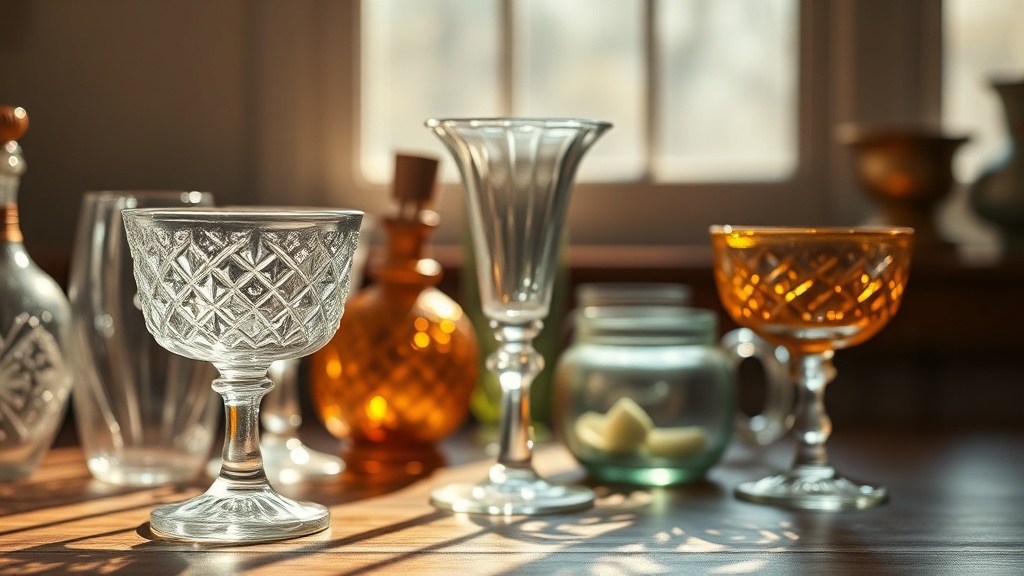
Preserving Vintage Glassware from Sunlight Damage

Imagine finding a stunning piece of cobalt blue glass or a rare, brightly colored apothecary bottle in a thrift shop, only to realize a few months later that the color has faded or the glass looks "cloudy" from sitting near a sunny window. Sunlight isn't just light; it's a constant stream of UV radiation that can physically alter the chemical composition of certain glass types and pigments. This post breaks down how light exposure affects different types of glass collections, how to identify sun damage, and the best ways to protect your bottles and small glass collectibles from permanent degradation.
How Does Sunlight Damage Glass?
Sunlight damages glass primarily through UV radiation and thermal stress. While high-quality soda-lime glass is relatively stable, many vintage colored-glass items—especially those with organic dyes or certain metallic oxides—can undergo "solarization." This is a chemical change where the glass changes color or loses its original pigment due to prolonged exposure to ultraviolet rays.
It's not just about the color, though. The heat from direct sunlight can also cause thermal expansion. If a glass bottle is sitting in a hot windowsill, the temperature fluctuations between the hot afternoon sun and the cool night air create stress. This can lead to microscopic cracks or even "shattering" if the glass is particularly thin or has internal flaws. This is especially common with vintage hand-blown glass or older pharmaceutical bottles that might have inconsistent wall thickness.
For collectors of "smalls"—the tiny glass trinkets or even certain vintage bottle caps with glass components—this is a hidden danger. You might not notice the change in a single day, but over a year, the cumulative effect is undeniable. A bright amber bottle might turn a dull, brownish-yellow, or a vibrant green might lose its luster entirely.
To understand the science behind this, you can look into the Wikipedia entry on solarization, which explains how radiation affects the structure of materials. It's a slow process, but it's often irreversible once the pigment has shifted.
Can UV Rays Fade Colored Glass?
Yes, UV rays can significantly fade the pigment in many types of colored glass and decorative glass-based items. While the glass itself is a mineral, the additives used to create specific colors—like certain metal oxides—can react to light. For instance, some vintage glass pieces use pigments that are more susceptible to light-induced chemical shifts than others.
Here is a breakdown of how different types of glass react to light exposure:
| Glass Type | Sensitivity Level | Typical Reaction |
|---|---|---|
| Soda-Lime Glass | Low | Generally stable, but can suffer from thermal cracking. |
| Lead Crystal | Medium | Can lose brilliance if surface coatings are damaged. |
| Colored Glass (Organic Pigments) | High | Significant fading or color shifts (e.g., amber to pale yellow). |
| Iridescent Glass | High | The surface sheen can dull due to heat and UV exposure. |
The issue with iridescent glass—think of that shimmering, oily look on certain vintage carnival glass—is that the thin layer of metal oxides on the surface is incredibly delicate. If it gets too hot or stays in direct sunlight, that "glow" can literally bake off or degrade, leaving the piece looking flat and dull. It's a heartbreaking sight for a collector.
One thing to watch out for is the "clouding" effect. Sometimes, collectors mistake this for dirt or soap scum, but it's actually a permanent change in the glass surface caused by environmental exposure. Once that cloudiness sets in, there's no amount of scrubbing that will bring back the clarity.
What is the Best Way to Display Glass Collections?
The best way to display glass is to use indirect lighting and keep pieces away from direct windows. You want to showcase your collection without turning your display cabinet into a greenhouse. If you have a high-value piece—perhaps a rare piece of Smithsonian glass collection-style glass—it deserves a more controlled environment than a sunny bookshelf.
Here are my top tips for safe display:
- Use UV-Filtering Film: If your collection must be near a window, apply a UV-blocking film to the glass. This is a relatively inexpensive way to protect your items without moving them.
- LED Lighting: If you use display cases, stick to LED bulbs. Unlike older incandescent or halogen bulbs, LEDs produce very little heat and minimal UV radiation.
- Closed Cabinets: Displaying your bottles inside glass-fronted cabinets (like the IKEA Billy or similar display units) provides a physical buffer against temperature swings.
- Rotation: Don't let the same piece sit in the same spot for years. Even in a shaded room, light levels vary. Rotating your pieces can help prevent one specific item from taking the brunt of the light.
I've seen many collectors use high-end display lights that actually end up doing more harm than good. A light that is too bright or too hot can act like a magnifying glass, focusing heat directly onto a single bottle. It's a mistake you don't want to make. (I learned this the hard way with a beautiful green glass decanter—it looked great under the spotlight until the heat caused a hairline fracture.)
If you're serious about preservation, you should also consider the placement of your shelving. Avoid placing shelves directly above radiators or heating vents. The combination of heat from below and light from above is a recipe for disaster for delicate glassware.
How Do I Identify Sun Damage in Glass?
You can identify sun damage by looking for color shifts, loss of luster, or unexpected cloudiness in the glass. If a piece looks "different" than it did when you first acquired it—even if it's just a slight dullness—it's likely a sign of environmental stress.
When inspecting your collection, look for these three specific signs:
- Color Fading: Compare the piece to a known reference or a photo from the time of purchase. If a deep ruby red now looks like a pale pink, UV damage is the likely culprit.
- Surface Cloudiness: Look at the glass from different angles under a bright light. If you see a milky or hazy film that doesn't wipe away with a damp cloth, the glass structure has likely changed.
- Thermal Cracking: Check the edges and the base of the bottle. Small, jagged cracks (often called "stress cracks") can appear if the glass has been through too many heat cycles.
Sometimes, it's hard to tell if the damage is from the glass itself or from a residue. I always recommend a "wet test" first. If a light wipe with distilled water doesn't change the appearance of the "cloudiness," it's likely permanent structural damage and not just dust or mineral buildup.
Worth noting: many collectors often confuse "sick glass" (which is a chemical reaction involving moisture and alkali) with sun damage. While they look similar, sun damage is almost always driven by the intensity of light and heat. If you're seeing the issue primarily on the side of the bottle facing a window, you've found your answer.
It's a frustrating reality of the hobby. You spend years hunting for that one specific bottle, only to realize it's been slowly dying on a shelf right under your nose. But once you know what to look for, you can take control of the environment. Whether you're a collector of tiny glass caps or heavy apothecary bottles, the goal is the same: keep the light low and the temperature steady. Your collection will thank you.