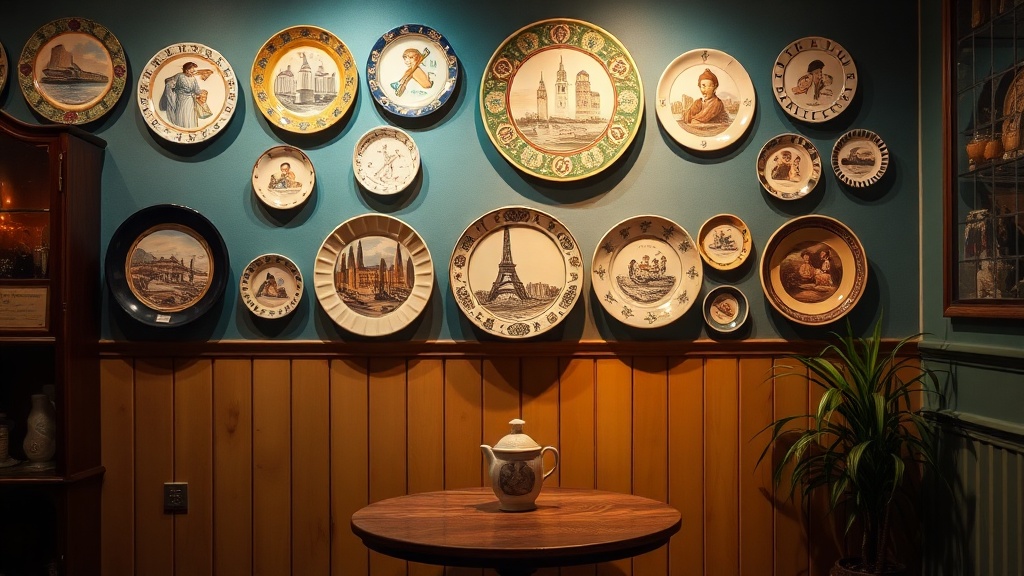
How to Display Souvenir Plates on Your Walls

This guide covers everything needed to mount, arrange, and protect souvenir plates on walls—from selecting the right hangers to creating gallery-style displays that showcase collections without damage. Whether the collection spans decades of travel memories or features vintage advertising plates, proper display techniques preserve value while turning walls into personal museums.
What Are the Best Ways to Hang Souvenir Plates on Walls?
The most reliable methods include spring-mounted wire hangers, adhesive disc hangers for lightweight pieces, and shadow boxes for valuable or fragile items. Each approach balances security, aesthetics, and preservation differently—so the "best" method depends on plate weight, wall surface, and whether the display is permanent or seasonal.
Spring-mounted wire hangers remain the gold standard for most collectors. These brass or vinyl-coated wires loop through the plate's foot rim and expand to grip securely. BCW Supplies offers wire hangers in multiple sizes, from 3-inch versions for bread-and-butter plates up to 10-inch options for large decorative chargers. The wire distributes weight evenly and allows plates to sit flat against the wall—no wobbling, no visible hardware from the front.
Adhesive disc hangers work for plates under 2 pounds with smooth, unglazed backs. The 3M Command brand dominates this category with damage-free mounting strips that peel away cleanly. Here's the thing: adhesive solutions fail over time, especially in humid Montreal summers or near bathroom displays. They're fine for temporary arrangements or rotating seasonal pieces, but serious collectors avoid them for permanent installations.
For rare, antique, or sentimental pieces, shadow boxes provide protection and display in one. These framed enclosures shield plates from dust, UV light, and curious fingers. Michaels carries shadow boxes in standard sizes, though custom framing at shops like DeSerres offers better archival materials—museum glass and acid-free backing boards that prevent yellowing over decades.
Wall Surface Considerations
Drywall, plaster, and brick each demand different approaches. Drywall accommodates most hangers with standard anchors rated for 10-25 pounds. Plaster walls—common in older Montreal homes—require pre-drilling with masonry bits to prevent crumbling. Brick demands masonry screws or adhesive mounts designed for porous surfaces.
Worth noting: plate weight adds up fast. A single decorative plate might weigh 8 ounces, but six plates in a grid arrangement create significant load. Always check anchor ratings and distribute weight across multiple studs when possible. Stud finders—available at any hardware store—pay for themselves the first time they prevent a crashed display.
How Do You Arrange Multiple Plates on a Wall?
Successful arrangements follow geometric patterns—grids, radiating circles, or organic clusters—with consistent spacing between plates (typically 2-4 inches) and visual balance across the entire composition. The arrangement style should complement both the room's architecture and the plates' visual weight.
Grid arrangements suit modern interiors and formal dining rooms. They demand precision: measure twice, mark lightly with pencil, and use a level. For a 2x3 grid of dinner plates, start with the center point and work outward. The result reads as intentional and architectural—clean lines that frame the collection as art.
Radiating circle arrangements work beautifully above fireplaces or on staircase walls. Place the largest or most visually striking plate at center, then arrange smaller plates around it like satellites. This approach accommodates plates of varying sizes naturally and creates movement that draws the eye.
Organic clusters—think gallery walls but with plates—suit eclectic collections and casual spaces. The technique requires more trial and error: arrange plates on the floor first, photograph the layout, then transfer to the wall. Vary sizes and orientations, but maintain some connective thread—matching rim colors, similar themes, or consistent eras.
Spacing and Scale Guidelines
| Arrangement Type | Spacing Between Plates | Best For | Difficulty Level |
|---|---|---|---|
| Grid | 2-3 inches | Uniform plate sizes, modern spaces | Moderate |
| Radiating circle | 3-5 inches | Mixed sizes, focal points | Easy |
| Linear row | 4-6 inches | Above cabinets, narrow walls | Easy |
| Organic cluster | 2-4 inches (varied) | Eclectic collections, casual rooms | Challenging |
The catch? Ceilings matter. Standard 8-foot ceilings compress vertical arrangements—keep the top row at least 12 inches below crown molding. Higher ceilings (9+ feet) allow for dramatic vertical stacks that draw the eye upward, emphasizing the room's generous proportions.
How Do You Protect Souvenir Plates From Damage When Displaying?
Protection requires controlling light exposure, maintaining stable humidity, using archival mounting materials, and positioning displays away from high-traffic areas where accidental contact occurs. Most damage to displayed plates happens gradually—fading, micro-cracking, or metal fatigue that accumulates over years of improper conditions.
Light damage tops the list of display hazards. Direct sunlight degrades transfer-printed designs and bleaches hand-painted colors within months. UV-filtering glass or acrylic—available from framing suppliers like Framebridge—blocks 99% of harmful rays while remaining nearly invisible. For open displays, position plates away from windows or rotate pieces seasonally, storing some while others take the spotlight.
Humidity swings cause expansion and contraction in ceramic bodies, eventually leading to crazing—that spiderweb pattern of fine cracks in the glaze. Montreal's humid summers and dry winters pose particular challenges. Interior walls (sharing space with heated/cooled rooms) experience more stable conditions than exterior walls. Avoid hanging plates directly above radiators or in bathrooms where steam exposure accelerates deterioration.
Mounting materials themselves can harm plates. Metal hooks that touch plate surfaces cause abrasion. Rubber-coated or vinyl-coated hangers prevent this. For adhesive solutions, never use standard double-sided tape or poster putty—these leave permanent residues and can pull glaze from the plate back when removed. Acid-free felt pads behind hanging plates protect both the plate and the wall from scratches.
Cleaning and Maintenance
Dust accumulation dulls colors and can scratch surfaces if disturbed with rough cleaning. Monthly dusting with a soft microfiber cloth—lightly dampened for stubborn dust—keeps displays vibrant. Never spray cleaning products directly onto displayed plates; overspray seeps into cracks and porous clay bodies, causing staining that can't be reversed.
Rotation isn't just for light management—it also prevents stress on hanging hardware. Every six months, remove plates and inspect wire hangers for metal fatigue or adhesive mounts for loosening. This brief inspection catches problems before plates crash to the floor. That said, resist the urge to constantly rearrange; each handling introduces risk of chips or drops.
What About Displaying Plates in Non-Traditional Spaces?
Plates need not hang flat against walls. Plate stands allow tabletop displays on sideboards, mantels, or built-in shelving. Wall-mounted plate rails—narrow ledges with a groove that grips the plate foot—enable easy rotation and mixed displays with framed photos or small objects. Even ceiling-hung installations work for dramatic vertical spaces, suspended on fishing line from eye hooks.
Plate stands come in acrylic, brass, and wrought iron varieties. The best stands grip the plate securely without pressure points that stress the ceramic. Look for stands with cork or felt padding where contact occurs. Tripar International makes reliable acrylic stands in multiple sizes, available through Amazon or specialty retailers. These suit shallow shelves where hanging hardware would position plates too far forward.
Wall-mounted plate rails—sometimes called gallery rails—offer flexibility collectors appreciate. A single rail spanning a dining room wall accommodates rotating seasonal displays: Christmas plates in December, summer travel souvenirs in July, vintage advertising pieces year-round. The rail itself becomes architectural detail, available in wood tones or painted finishes that complement trim work.
For the truly adventurous, ceiling-suspended displays create floating effects that stop visitors mid-conversation. Invisible fishing line (monofilament rated for 20+ pounds) attaches to ceiling hooks, then loops through plate hangers. The plates appear to hover. This technique works especially well in rooms with tall ceilings, stairwells, or above kitchen islands where wall space is limited.
Storing Plates Not on Display
Rotation requires safe storage for pieces not currently exhibited. Never stack plates directly atop each other—rim contact causes chipping and scratching. Felt rounds or paper plates placed between each piece create protective layers. Store upright in cabinets or archival boxes, not flat (which concentrates weight and stress on the bottom plate).
Climate-controlled storage matters for valuable pieces. Basements flood. Attics bake. Interior closets maintain the most stable conditions. For high-value collections, consider Gaylord Archival boxes—acid-free, lignin-free containers that buffer against environmental fluctuations. They're not cheap, but neither is replacing a cracked Limoges or irreplaceable family heirloom.
Can You Mix Plate Styles in One Display?
Absolutely—and doing so creates visual interest that uniform displays lack. The key lies in establishing cohesion through color, theme, or era rather than identical styles. A collection mixing 1950s state souvenir plates with contemporary travel acquisitions works when unified by blue tones or consistent frame treatments.
Successful mixing follows the 60-30-10 rule borrowed from interior design: 60% dominant style (perhaps vintage advertising plates), 30% secondary style (travel souvenirs), 10% accent pieces (hand-painted artisan plates or unusual shapes). This ratio prevents visual chaos while allowing personality to shine through.
Scale variation adds depth. Combine dinner plates (10-12 inches) with salad plates (7-9 inches) and bread plates (6-7 inches) in graduated arrangements. Large plates anchor the composition; smaller pieces fill gaps and create rhythm. Avoid mixing plates with wildly different depths—deep coupe plates alongside flat luncheon plates create awkward shadows and spacing challenges.
Color coordination doesn't mean matching exactly. Analogous colors (neighbors on the color wheel) create harmonious displays: blues with greens, yellows with oranges. Complementary colors (opposites on the wheel) create drama: red transferware against sage walls, cobalt patterns against cream backgrounds. Neutral walls—white, gray, beige—provide the most versatility for colorful collections.
Start with a focal point. The eye needs somewhere to land before wandering across the arrangement. That focal point might be the largest plate, the most colorful piece, or the one with strongest sentimental value. Build outward from there, placing supporting pieces in conversation with the star. When every plate competes for attention, none receives it. Curate ruthlessly—better to display twelve plates beautifully than twenty crowded together.
Finally, consider the wall itself as part of the composition. Dark paint makes light-colored plates pop; light walls recede to emphasize colorful collections. Textured wallpaper, shiplap, or exposed brick adds dimension that flat painted drywall cannot match. The plate collection and its backdrop should work together—neither overpowering the other.
Steps
- 1
Choose the Right Plate Hangers for Your Plates
- 2
Plan Your Wall Layout Before Hanging
- 3
Securely Mount and Arrange Your Plates