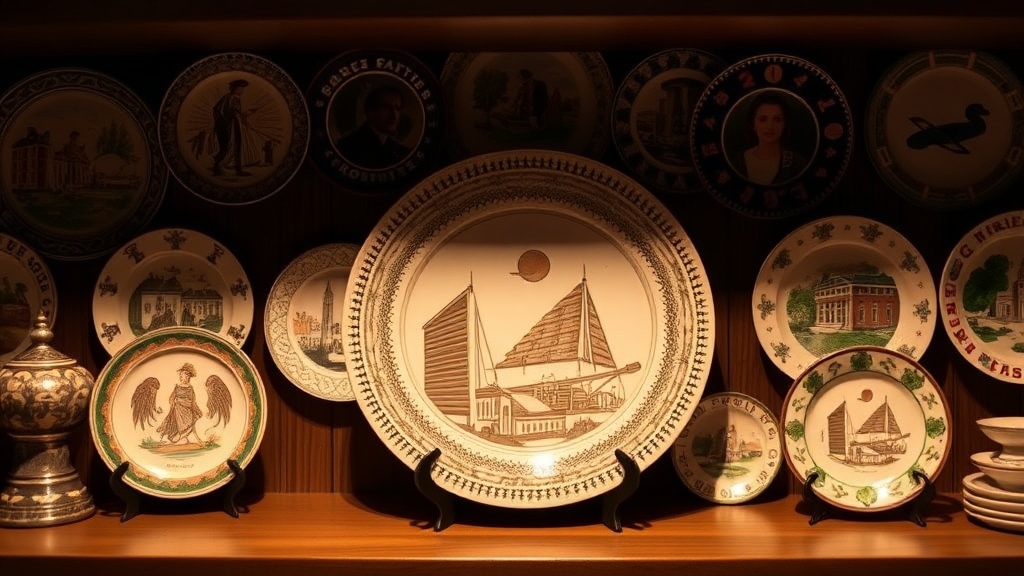
How to Display Souvenir Plates: 5 Creative Ways to Showcase Your Collection

Souvenir plates deserve more than a dusty box in the attic. This guide covers five practical display methods — from wall-mounted racks to custom shelving — that protect pieces while turning a collection into genuine home décor. Whether dealing with fragile vintage finds or contemporary travel mementos, these approaches balance aesthetics with preservation.
What's the Best Way to Hang Plates on Walls Without Damage?
Plate hangers work. The spring-loaded wire variety fits most standard sizes and distributes weight evenly across the rim. For heavier ceramic pieces — think those thick Delft blues or chunky Mexican talavera — look for holders rated above five pounds.
Command strips? They'll work in a pinch. That said, adhesive solutions fail eventually. Heat, humidity, time — all conspire against sticky backing. Here's the thing: a plate crashing to the floor isn't just heartbreaking; it's expensive. Museums use D-rings and picture wire for a reason.
For serious collectors, the Hang Ups! plate hanger system offers invisible support. Clear polycarbonate clips grip from behind — no metal wires visible from the front. The Invisible English Disc hanger (available through collectible supply shops) works similarly for shallow-rimmed plates where traditional hangers won't fit.
Layout matters as much as hardware. The "gallery wall" approach — mixing plate sizes asymmetrically — creates visual interest. Symmetrical grids suit formal dining rooms. Worth noting: paper templates cut to plate size let you experiment before drilling a single hole.
Can You Display Plates on Shelves Without Them Falling Over?
Ridges work better than rails. Plate rails with a shallow groove (roughly ¼ inch deep) cradle the rim securely. IKEA's MOSSLANDA picture ledge — though marketed for frames — handles standard 8-10 inch plates beautifully. For larger display pieces, the IKEA BOTKYRKA steel shelf with its raised front edge provides excellent stability.
Professional-grade options exist too. The Gaylord Archival plate ledge — designed for museum use — features a deeper channel and soft padding. Pricier? Yes. But for displaying that 1920s Royal Copenhagen you've been hunting for years, the investment makes sense.
Spacing separates amateur displays from curated collections. Overcrowding kills the effect. Leave at least two inches between plate edges — more for larger statement pieces. The eye needs room to appreciate each individual design.
Lighting transforms shelf displays. LED strip lights mounted above or below shelves cast even illumination without heat damage. (Heat is the enemy of vintage glazes — it'll craze the surface over time.) The Philips Hue Play light bar system offers tunable white options that won't distort colors.
What Are the Best Display Cabinets for Collectible Plates?
Glass-front cabinets protect while showcasing. The IKEA FABRIKÖR — that vintage-style metal and glass cabinet — has become something of a standard among collectors. Adjustable shelves accommodate varying plate diameters. The glass sides mean visibility from multiple angles.
For dedicated collectors, the Howard Miller Curio Cabinet line offers superior construction — solid wood, beveled glass, interior lighting. The "Pueblo" model features a sliding door (no swing space needed) and mirrored back that doubles visual depth.
Here's a comparison of common cabinet options:
| Option | Price Range | Best For | Drawbacks |
|---|---|---|---|
| IKEA FABRIKÖR | $199-299 | Starter collections, modern spaces | Metal frame shows fingerprints; limited sizes |
| Howard Miller Curio | $800-2,500 | Valuable collections, traditional décor | Heavy; requires assembly; premium pricing |
| Pulaski Curio | $400-900 | Mid-range budgets, adjustable shelving | Particle board construction in lower models |
| Custom Built-In | $2,000+ | Permanent installations, large collections | Not portable; requires professional installation |
The catch? Cabinets create humidity traps. Silica gel packets — those little desiccant pouches — belong in every closed display case. Replace them quarterly. Stagnant air breeds mold, and mold ruins paper labels, discolors ceramics, and destroys value.
How Do Museums Display Plates for Maximum Impact?
Easels. Specifically, bent acrylic or brass plate stands that support from behind. The Museum Store Company sells adjustable brass easels with felt padding — elegant, stable, and suitable for pieces up to 12 inches diameter. For smaller butter pats or souvenir miniatures, clear acrylic "H" stands disappear visually.
Angle matters. Plates displayed vertically (flat against walls) read as two-dimensional — you lose the depth of hand-painting or relief work. Tilting back 15-20 degrees catches light across the surface, revealing brushstrokes and glaze variations that flat display hides.
The Smithsonian Institution's display guidelines recommend supporting plates at multiple points — never just the rim or just the center. Pressure points cause stress cracks. Quality easels distribute weight across a broad surface area.
Rotation extends plate life. Permanent display — even in ideal conditions — causes uneven fading. That sun-bleached spot where morning light hits? It won't recover. Rotate pieces seasonally. Store the "off-duty" collection in acid-free tissue, vertically in boxes — never stacked flat, which can cause scratching.
What About Creative or Unconventional Display Ideas?
Think beyond walls and cabinets. A vintage wooden ladder — the kind painters used, not the aluminum hardware store variety — leans against a wall with plates propped on rungs. The rustic texture contrasts beautifully with fine china.
Window displays? Possible — with UV-blocking film. Standard glass lets through damaging ultraviolet rays that fade colors irreversibly. 3M's Prestige window film blocks 99.9% of UV without darkening the room. It's not cheap. Neither is replacing a faded View of Mount Vernon plate from 1905.
Repurposed furniture opens possibilities. An old printer's type tray — those shallow wooden drawers with dozens of compartments — displays small souvenir plates perfectly. Each compartment becomes a mini-gallery. The Paterson Paper Company in Montreal (a local salvage favorite) sometimes stocks these trays from defunct print shops.
Magnetic strips work for enamel plates or pieces with ferrous metal backing. Rare earth magnets — powerful little discs available at Lee Valley Tools — grip securely through felt padding. The strips themselves mount to walls or board backing. This approach suits contemporary spaces, industrial aesthetics.
Shadow boxes add dimension. Deep frames — 3-4 inches — let you display plates alongside related ephemera: postcards from the same location, vintage photographs, small souvenirs. Michaels and Jo-Ann Fabrics stock shadow boxes in standard sizes; custom framing shops handle odd dimensions. The key is archival mounting — no tape, no glue, no direct contact with non-archival materials.
One final thought: your collection tells a story. Display choices should serve that narrative. Group by location? By era? By color? There's no wrong answer — only missed opportunities to let these pieces speak.
Steps
- 1
Choose the Right Display Method for Your Space
- 2
Arrange Your Plates in a Visually Pleasing Layout
- 3
Secure and Install Your Plates Safely