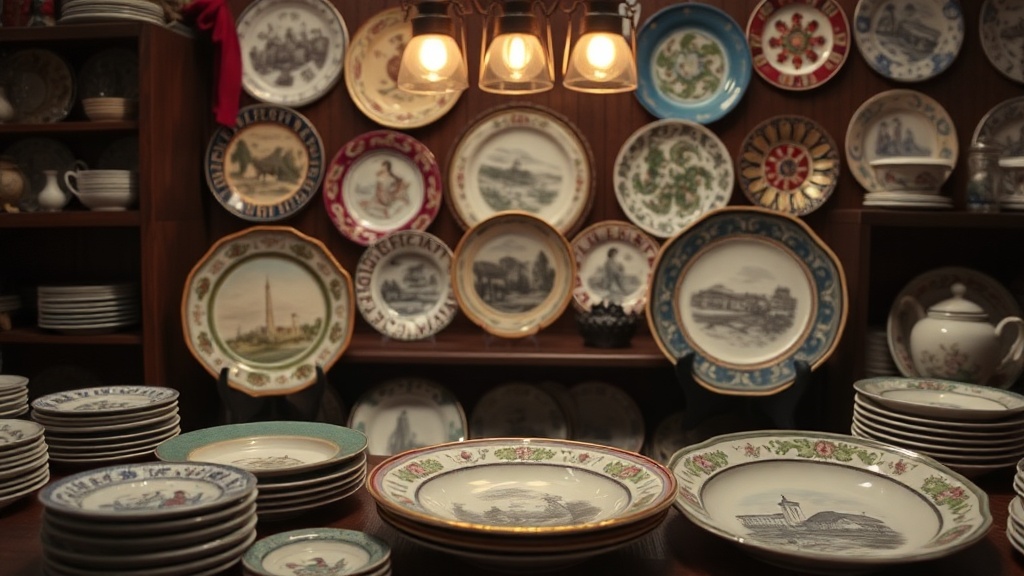
Beyond the Keepsake: Decoding the Real Value in Vintage Souvenir Plates

What Makes a Souvenir Plate Truly Valuable?
Did you know that in the 1970s, the market for collector plates became so sophisticated that J. Roderick MacArthur founded the Bradford Exchange, complete with a computerized trading floor that tracked their daily market value? It was a bona fide stock market for commemorative china, processing thousands of transactions daily. This surprising history underscores a crucial point: not all souvenir plates are created equal, and some hold far more than just sentimental value. This guide will walk you through the key characteristics that elevate certain vintage souvenir plates from mere mementos to genuine collectibles, helping you discern potential treasures from everyday trinkets.
The Allure of Rarity and Historical Resonance
True value in vintage souvenir plates often correlates directly with their rarity and their connection to significant historical events or cultural moments. Think beyond the common tourist trap plates you might pick up today. We’re talking about pieces that commemorate specific, often fleeting, occasions, or those produced in extremely limited runs. For example, the Danish company Bing & Grøndahl pioneered the concept of the “limited edition” collector’s plate in 1895 with Behind the Frozen Window. To guarantee its scarcity, they famously smashed the mold after the initial production, creating a marketing phenomenon that collectors still chase today. Plates tied to world’s fairs, significant jubilees, or even obscure local events like the “McKinley Stump” (yes, a plate once featured a tree stump where President McKinley had stood) can fetch surprising prices precisely because of their unique narratives and limited availability.
Is Condition Really Everything?
When assessing a vintage souvenir plate, condition isn’t just important—it’s paramount. Even the rarest plate will see its value severely diminish if it’s chipped, cracked, crazed (fine hairline cracks in the glaze), or if its decorative elements have faded significantly. Collectors are seeking pieces that are as close to their original state as possible. Think of it this way: a pristine condition plate allows the artistry and history to shine through, whereas damage distracts and detracts. Always inspect for repairs too; sometimes, a clever restoration can hide significant damage, so look closely for discrepancies in color, texture, or reflectivity, especially when tilted against the light.
How Can I Identify Authentic Vintage Pieces?
Distinguishing a genuinely vintage souvenir plate from a more recent reproduction or a piece of lesser quality requires a keen eye and some knowledge of manufacturing indicators. It’s not always obvious, but a few tell-tale signs can give you significant clues about a plate’s age and origin.
Decoding the Backstamp: A Plate's ID Card
The backstamp, or maker’s mark, on a plate’s underside is your primary detective tool. These marks evolve over time, offering a chronological breadcrumb trail for identification. Early 20th-century plates might feature simple printed or impressed marks, while later pieces often include more detailed information, sometimes even patent numbers or date codes. Many countries, particularly England, also mandated “registry marks” or “diamond marks” during certain periods, which can pinpoint the exact date of manufacture. Familiarizing yourself with common pottery marks from regions known for souvenir plate production—like Staffordshire in England, Limoges in France, or various German manufacturers—is incredibly helpful. Websites dedicated to pottery marks are invaluable resources for cross-referencing these identifiers. A good rule of thumb: the more detailed and period-appropriate the backstamp, the more confident you can be in its authenticity and age.