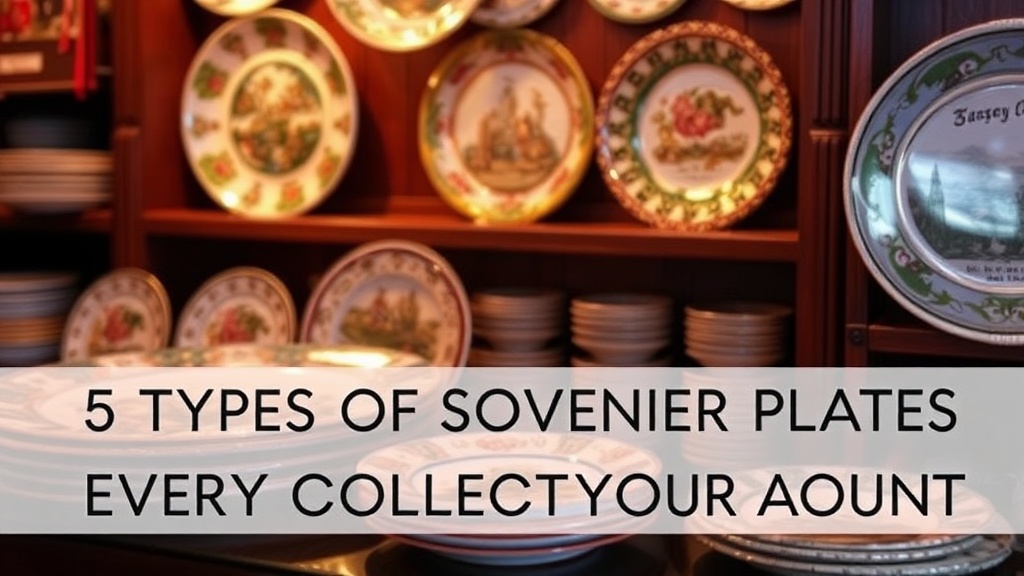
5 Types of Souvenir Plates Every Collector Should Know About

Vintage State and City Landmark Plates
Limited-Edition Commemorative Plates
Hand-Painted Artisan Souvenir Plates
Historical Event and Anniversary Plates
International Travel Destination Plates
Souvenir plates represent one of the most accessible entry points into the world of collectibles. Whether you're hunting through flea markets in Montreal's Plateau-Mont-Royal or browsing estate sales online, understanding the five main categories of commemorative plates will save you from overpaying for common pieces — and help you spot genuine treasures hiding in plain sight. This guide breaks down each type, what makes them valuable, and where collectors typically find them.
What Are Souvenir Plates and Why Do People Collect Them?
People collect souvenir plates for the stories they tell. Each piece captures a moment in time — a world's fair, a coronation, a local landmark, or a significant historical event. Unlike fine china dinnerware, these plates were never meant for daily use. They exist purely as decorative mementos, which explains why so many survive in pristine condition decades after production.
The hobby attracts diverse collectors. Some focus on specific themes — travel destinations, royal commemoratives, or advertising plates from defunct breweries. Others chase particular manufacturers like Wedgwood, Spode, or Royal Copenhagen. The market ranges from dollar-bin finds at garage sales to rare pieces fetching thousands at auction houses like Christie's.
Here's the thing about value: condition matters more than age. A 1920s Blue Willow tourist plate from Niagara Falls might sell for $15, while a limited-edition Bing & Grøndahl Christmas plate from the same era could command $300 or more. The difference? Scarcity, craftsmanship, and whether the original box and documentation survived.
What Are the Most Valuable Types of Souvenir Plates to Collect?
The most valuable souvenir plates fall into five distinct categories: limited-edition commemorative plates, vintage advertising plates, historical event plates, travel and destination plates, and artist-signed studio pieces. Each category attracts different collectors and follows its own pricing patterns.
1. Limited-Edition Commemorative Plates
Royal Copenhagen pioneered the modern limited-edition plate market in 1895 with its first Christmas plate. The Danish manufacturer releases one design annually, retiring it forever on December 31st. This artificial scarcity drives demand — older plates, especially pre-1920s examples, regularly sell for several hundred dollars.
Bing & Grøndahl (now part of Royal Copenhagen) followed suit with their own Christmas series starting in 1897. The two brands dominate this niche, though smaller manufacturers like Porsgrund and Weimar also produced limited runs. Collectors often specialize — completing full decades or hunting specific artists like Axel Salto or Thorkild Olsen.
The catch? Reproductions exist. Authentic Royal Copenhagen plates bear specific factory marks: three wavy lines in blue underglaze, the word "Denmark," and the artist's initials. Post-1935 pieces include a crown mark. If a deal seems too good to be true at a thrift store, examine the back carefully. Modern fakes often use transferred decals rather than hand-painted designs.
2. Vintage Advertising Plates
Breweries, soda companies, and local businesses gave away or sold decorative plates throughout the 20th century. These advertising pieces now rank among the most collectible souvenir plates — especially those from defunct brands or featuring iconic artwork.
Budweiser produced extensive plate series through the 1970s and 80s, including their famous Clydesdale collections and holiday editions. While common examples trade for $10-30, rare prototypes or limited regional releases can reach $200+. The Frankoma Pottery company created advertising plates for small businesses across Oklahoma and Texas — these regional pieces command premiums from collectors seeking local history.
Condition issues plague advertising plates. Many hung in bars, restaurants, or kitchens for decades. Smoke staining, fading from sun exposure, and chips around the rim drastically reduce value. That said, a damaged plate from a truly rare brewery might still warrant purchase — just don't expect top dollar when reselling.
3. Historical Event Plates
Coronations, world's fairs, and presidential inaugurations spawned massive plate production. The 1893 Chicago World's Fair (Columbian Exposition) generated dozens of commemorative designs from manufacturers like Wedgwood, Doulton, and countless American potteries. These plates served as affordable souvenirs for fairgoers — millions were produced, yet survival rates vary wildly by specific design.
Royal commemoratives dominate this category. Queen Victoria's Golden Jubilee (1887), Queen Elizabeth II's coronation (1953), and royal weddings generated enormous quantities of souvenir plates. British manufacturers like Wedgwood, Paragon, and Royal Winton led production, though German and Japanese factories also exported designs to Commonwealth markets.
Worth noting: modern royal commemoratives rarely appreciate. The market flooded with plates for Prince William's wedding, Queen Elizabeth's Platinum Jubilee, and King Charles's coronation. Buy these if you enjoy them — not as investments. The real money lies in 19th-century pieces and those tied to significant historical moments (the moon landing, the end of World War II, etc.).
4. Travel and Destination Plates
Perhaps the most common type you'll encounter — and often the most overlooked. These plates feature landmarks, cityscapes, and scenic views from tourist destinations worldwide. From the Eiffel Tower to the Grand Canyon, manufacturers produced these by the millions throughout the 20th century.
Not all destination plates are equal. Hand-painted examples from small European workshops (especially pre-1950s) hold real value. Look for "hand-painted" or "hand-decorated" marks on the reverse. Machine-printed plates from major tourist sites — think Niagara Falls, Yellowstone, or the Canadian Rockies — typically sell for $5-20 unless they're particularly old or feature unusual artwork.
The most collectible destination plates come from defunct attractions. A plate from the 1939 New York World's Fair or Montreal's Expo 67 carries more historical weight — and value — than a generic 1990s souvenir from Walt Disney World. Local landmarks that no longer exist (demolished hotels, closed amusement parks, vanished viewpoints) create instant collectibility regardless of production quality.
5. Artist-Signed Studio Plates
The highest end of the souvenir plate market belongs to studio pottery — individual artists creating limited runs or one-of-a-kind pieces. Unlike mass-produced tourist items, these plates represent deliberate artistic statements. They're typically heavier, often feature visible throwing rings or hand-building marks, and bear the artist's signature or studio stamp.
American studio pottery exploded in popularity during the 1960s and 70s. Names like Otto and Vivika Heino, Peter Voulkos, and Beatrice Wood created plates that now command serious prices at galleries and auction houses. Even lesser-known regional potters from this era attract collectors — a signed plate from a documented craft fair or gallery showing carries provenance that mass-market pieces lack.
The problem with studio pieces? Attribution challenges. Unlike factory-marked Royal Copenhagen, a signature might be illegible or unfamiliar. Research is essential — resources like AskArt or local historical societies can help identify obscure makers. When in doubt, photograph the signature and any marks, then consult specialist forums before purchasing.
How Can You Tell If a Souvenir Plate Is Valuable?
Valuable souvenir plates share specific characteristics: clear manufacturer marks, limited production numbers, documented historical significance, excellent condition, and original packaging or documentation when available.
| Factor | High-Value Indicators | Red Flags |
|---|---|---|
| Marks | Factory stamps, artist signatures, limited-edition numbers | "Made in Japan" stickers (post-1950s), no marks at all |
| Condition | No chips, cracks, or crazing; vibrant colors | Utensil marks, fading, repaired damage |
| Age | Pre-1940s generally preferred; documented dates | Modern tourist pieces without historical significance |
| Rarity | Limited editions, regional releases, defunct manufacturers | Mass-produced items still available at gift shops |
| Subject | Royal events (pre-1950s), world's fairs, significant anniversaries | Generic landscapes with no specific landmark identified |
That said, personal enjoyment trumps investment potential for most collectors. A $5 plate from your grandmother's hometown might bring more satisfaction than a $500 Royal Copenhagen piece you'd never display. The best collections reflect genuine interest — not just market value.
Where Should You Look for Souvenir Plates?
Flea markets, estate sales, and specialized auctions offer the best hunting grounds. Online marketplaces like eBay provide selection but require careful scrutiny — photographs hide flaws, and sellers sometimes misrepresent age or authenticity.
Montreal collectors have particular advantages. The city's antique district along Notre-Dame Street West includes several shops specializing in Canadiana and commemorative items. Estate sales in older neighborhoods like Westmount and Outremont regularly produce Quebec-specific pieces — Expo 67 memorabilia, vintage advertising from local breweries like Molson and Labatt, and regional travel plates from the Laurentians or Eastern Townships.
Here's the thing about building a collection: patience pays. The collector who buys every plate they encounter ends up with a storage problem, not a curated collection. Focus on specific themes, set quality standards, and learn to walk away from "almost right" pieces. The perfect addition to your collection will appear — usually when you least expect it.
Souvenir plates connect us to places, events, and craftsmanship from decades past. Whether you're drawn to the intricate blue-and-white designs of traditional Danish Christmas plates or the bold graphics of 1970s advertising pieces, there's a category waiting for your attention. Start with what appeals to you — the knowledge (and the collection) will grow from there.